
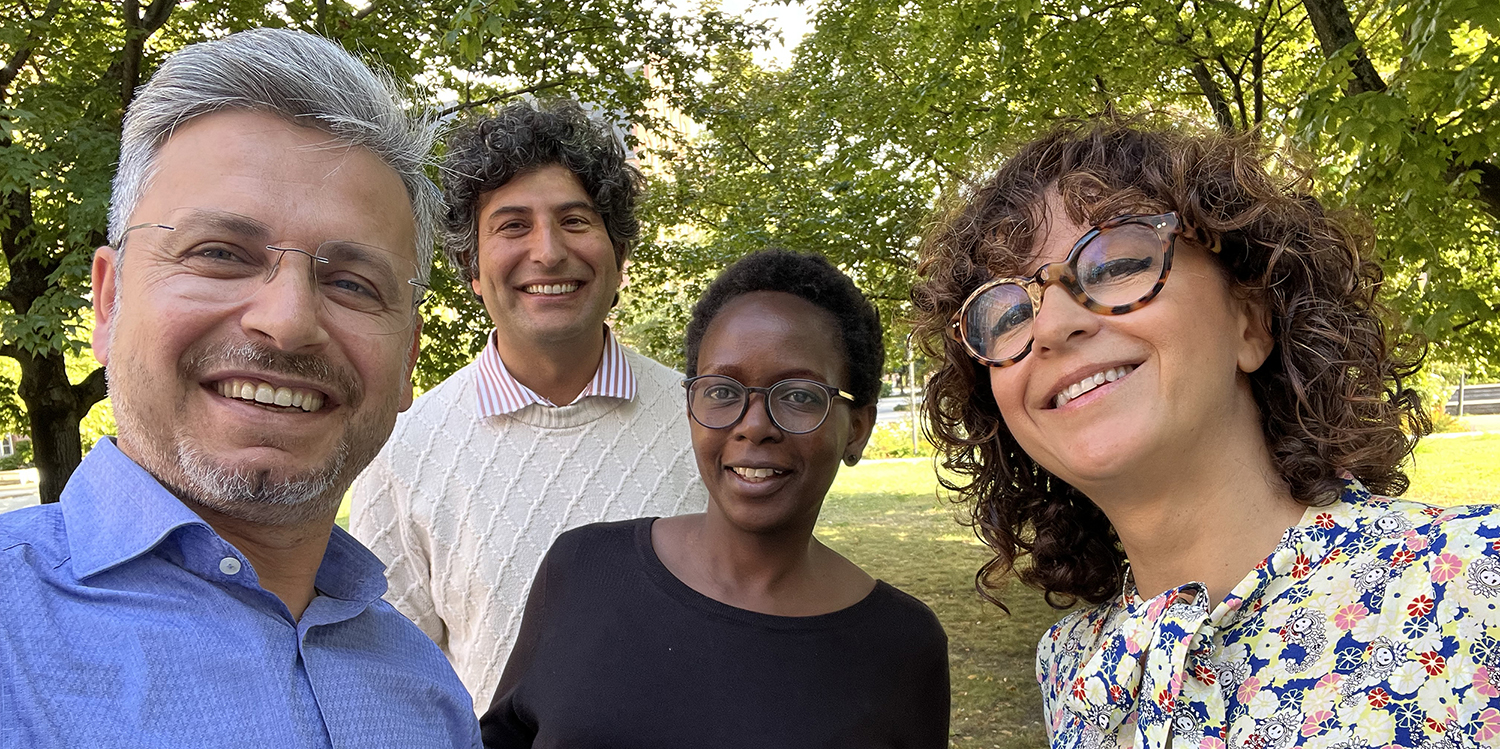
Researchers from UCMR Young Academy and the Max Planck Unit for the Science of Pathogens gathered in Berlin for a day of scientific exchange. Olivia Wesula Lwande, Aftab Nadeem and I presented our research and had the opportunity to meet Nobel laureate Emmanuelle Charpentier and colleagues from MPUSP.
For a while, we have been thinking to organize an event that would provide novel insights and some inspiration to the members of UCMR Young Academy. We all decided that it would be a great experience to visit the Max Planck Unit for the Science of Pathogens (MPUSP) in Berlin.
After extensive email correspondence and several phone calls with Nobel laureate Emmanuelle Charpentier, and with the support of Research Coordinator Mihaela Pruteanu, I organized a full-day mini-symposium on 10 September, featuring presentations by PIs, postdoctoral researchers, and PhD students from both institutes.
The day started with a welcome by Kürsad Turgay followed by elevator pitches. I opened the symposium by introducing the UCMR vision and environment, as well as the multidisciplinary environment of the Integrated Science Lab (IceLab). I also had the opportunity to introduce the Umeå University Northern Star Fellows Programme, which I believe is an excellent initiative for inspiring early-career researchers and encouraging them to consider Umeå University as a future destination.
After presenting elevator pitches on behalf of several members of the UCMR Young Academy, I had a chance to present our recent work. My talk titled “Decoding bacterial pathogenicity at the population and single-cell level during infection and stress” focused on understanding how bacteria adapt to infection environments and develop antibiotic resistance using infected human samples and experimental infection models. I also highlighted the novel technology that I and my team, including the µNordic Single Cell Hub, could bring to microbial infection studies in Umeå and the field in general, and how this increases the quality of the research in my lab. Consequently, I devoted much of the presentation to our newly developed single-cell approaches and their potential to drive breakthroughs in microbiology.
My fellow UCMR Young Academy representatives, Olivia Wesula Lwande and Aftab Nadeem, also presented their research on vector microbiota and host-pathogen interactions, respectively, highlighting the breadth and interdisciplinary nature of infection biology research at Umeå University.
For me, listening to the wonderful talks given by each project-leading researcher and student from Berlin was both inspiring and scientifically enriching. We listened to presentations from MPUSP and HU group leaders, including Kürsad Turgay, Marc Erhardt, Gita Naseri, and Philipp Popp, covering very interesting topics ranging from protein homeostasis to bioengineering microbial cells and bacterial anti-phage networks.
Emmanuelle Charpentier also presented her work on regulatory mechanisms in the pathogenesis of Streptococcus pyogenes. In the afternoon, it was great to hear from the postdoctoral researchers, PhD students, and platform scientists presenting diverse topics from structural biology and small proteins to proteomics and bioinformatics workflows.
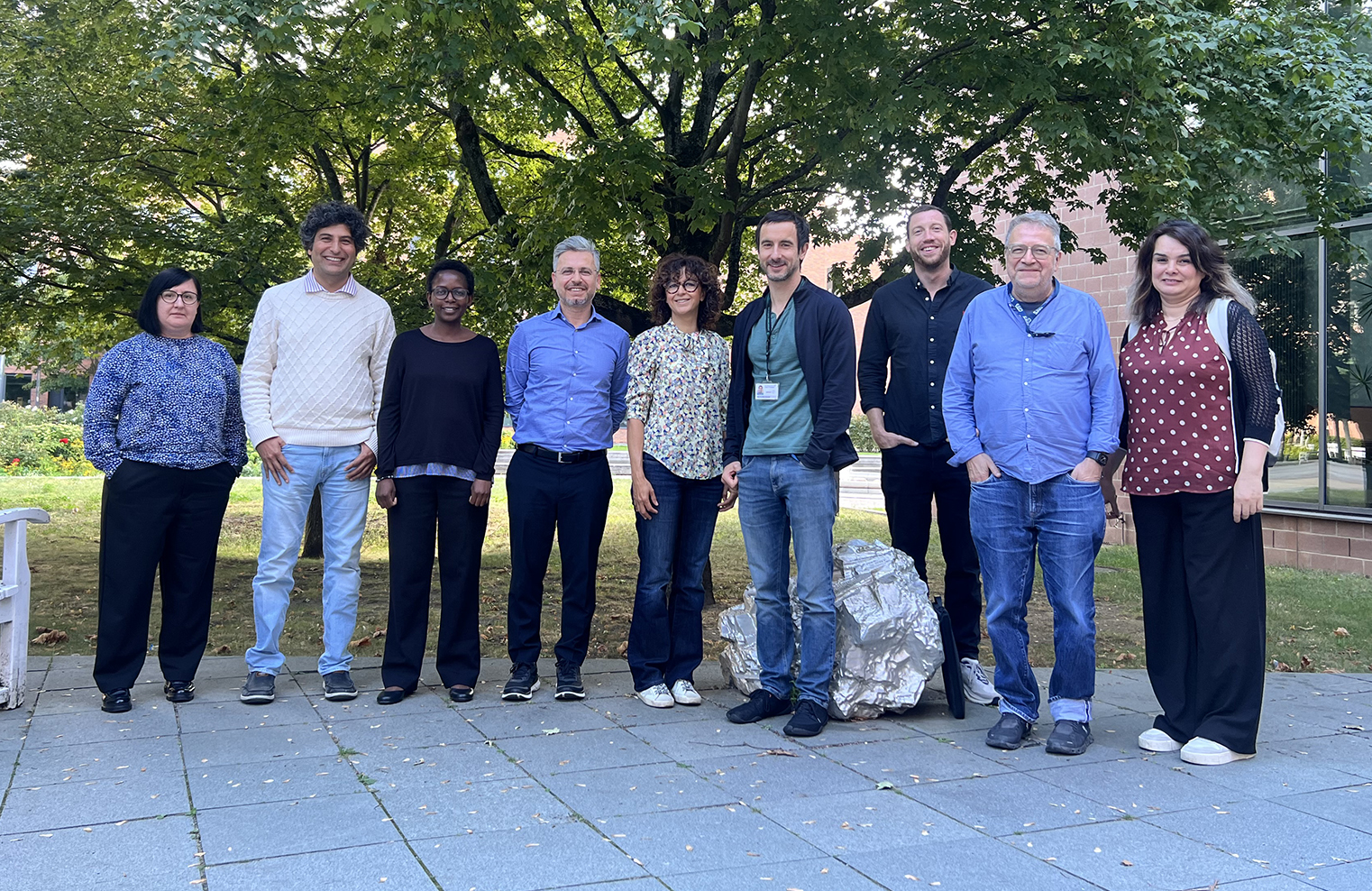
Some of the researchers gathered for a group photo outside. From left: Mihaela Pruteanu, Aftab Nadeem, Olivia Wesula Lwande, Kemal Avican, Emmanuelle Charpentier, Marc Erhardt, Philipp Popp, Kürsad Turgay, and Gita Naseri.
After the presentations were finished, we concluded the symposium with over two hours of discussions. We spent time giving feedback on the topics presented and exchanging ideas for possible future interactions. This was mostly on how our research could complement each other, which might lead to novel findings. We all really enjoyed these discussions, the openness, and the warm hospitality the group leaders showed to welcome us. We all found topics where our teams could complement each other, and we even identified further grant opportunities to apply for in a collaborative project.
Overall, I really enjoyed the environment and the motivation of the researchers there. Those discussions even led to arrangements for a second day to continue talking about future collaborations. What I liked the most was the effort Emmanuelle put to have this symposium happen and to build bridges between research groups, even for group leaders who were not in the symposium.
Beside the great scientific discussion and idea exchanges, I had the opportunity to discover Berlin, which I liked a lot. It has a lot of art exhibitions, a very cosmopolitan structure, and it is alive late into the nights. We had the chance to see the Berlin Wall Memorial and the Brandenburg Gate, which was a wonderful way to finish the trip.
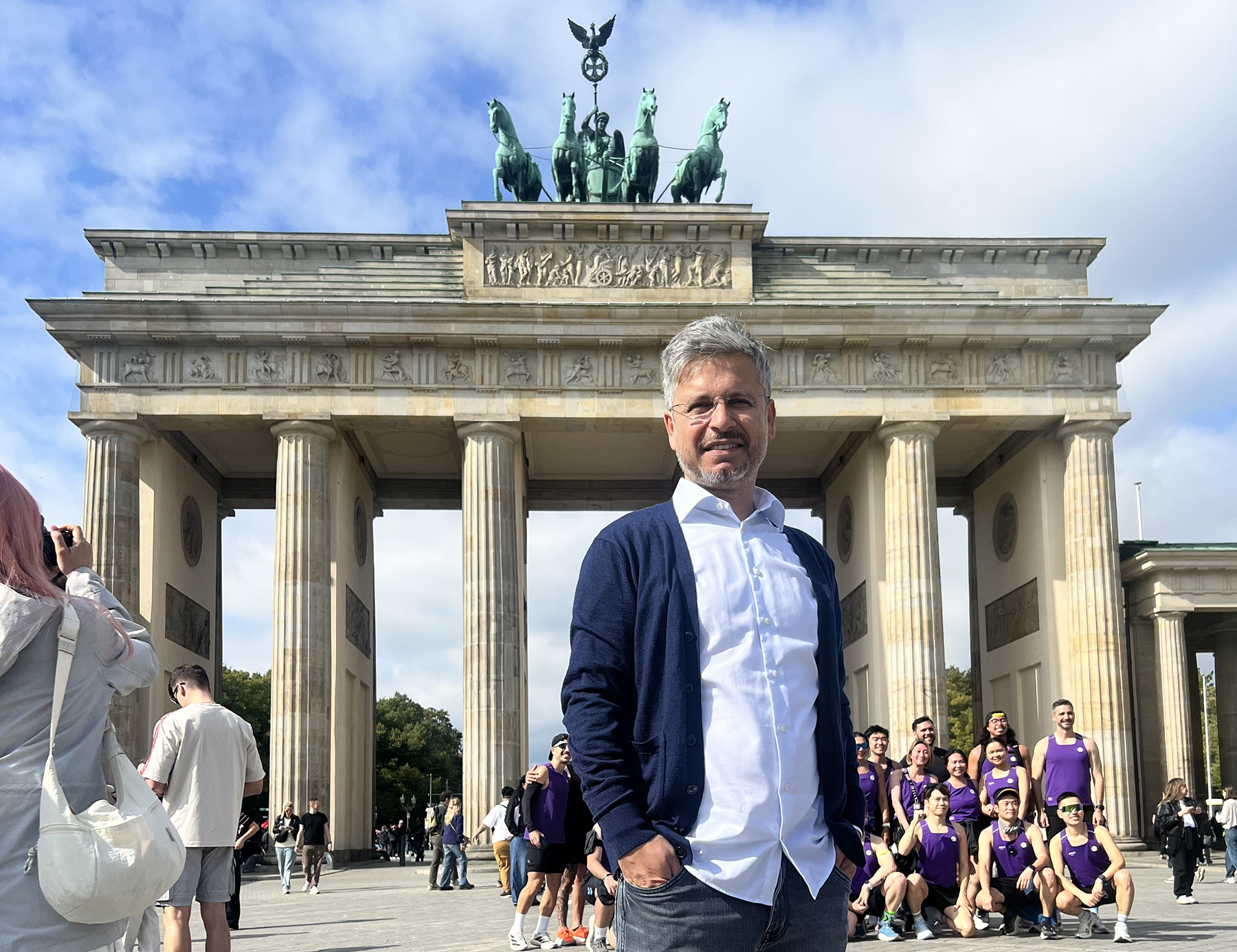
Berlin was offering memorable research discussions as well as a chance to explore the city’s rich history and culture. Here in front of Brandenburg Gate.
Text by: UCMR PI Kemal Avican
Visit my lab website
Department of Molecular Biology, Umeå University
Integrated Science Lab (IceLab) |UCMR | SciLifeLab
Director of µNordic Single Cell Hub (µNiSCH)
